
Administration of medicinal cannabis
There are different ways to take medicinal cannabis.
How medicinal cannabis, also known as medical cannabis, is taken determines the onset, intensity and duration of any effects. Therefore, choosing the correct administration route, or dose form, is important. The correct route helps patients manage their total daily dosage, the timing and frequency of use. It also helps reduce the risk of side effects. A doctor advises which administration route best suits the treatment outcome and patient needs.
How is medicinal cannabis taken?
Medicinal cannabis is typically taken by inhalation, oral ingestion, or oromucosal routes, each with distinct onset times, duration, and absorption rates. Inhalation through vaporizers effects quickly, while oral or oromucosal methods usually take longer but may last longer. Choosing the right administration route depends on the medical condition, dosage control needs, and patient convenience.
Below, you can find general information about the most common administration routes and dose forms for medicinal cannabis. You can also read about methods pharmacies use to prepare medicinal cannabis for patient use.
Also read:
Inhalation
Use

Vaporization of dried cannabis or cannabinoid solutions.
Devices

Volcano Medic
Mighty Medic
Syqe Air
Onset

10 – 30 minutes
Duration

1-3 hours
Inhalation or administration via the lungs is a very common route. This is because of the rapid absorption of the cannabinoids by the lungs (i.e. THC and CBD). A medical device is necessary to ensure safer and consistent administration. Using a medical device, doctors can advise patients how to gradually reach an optimal dosage (dose titration). There are currently three registered medical devices that were developed specifically for the medicinal use of cannabis:
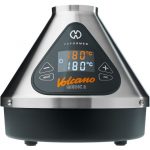
A table top vaporizer device that produces a vapour of cannabinoids from dried cannabis flowers. It is also suitable for vaporizing dronabinol dissolved in alcohol.
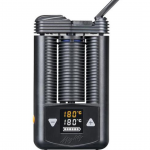
A portable vaporizer device that produces a vapour of cannabinoids from dried cannabis flowers.
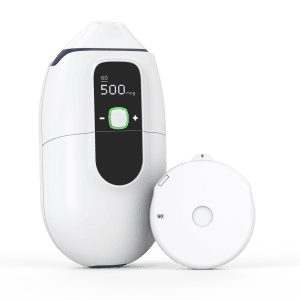
An EU-GMP-certified inhaler developed for professional healthcare use in hospitals or by licensed patients. It delivers metered and consistent doses of cannabinoids from full-spectrum cannabis in the form of aerosols. The device is currently only available in Israel and Australia.
Oromucosal administration
Use

Sublingual or buccal dosing.
Dose Type

Medicinal cannabis drops or sprays.
Onset

2 – 4 hours
Faster onset than oral ingestion, may reduce first-pass liver metabolism, suitable for
controlled dosing.
Duration
6 – 8 hours
With the oromucosal administration, the cannabinoids (THC and CBD) are absorbed through the mouth’s mucosa (the mucus membrane lining the inside of the mouth). The dose is usually administered sublingually (under the tongue) or buccally (inside the cheek) in the form of a solution, spray, or rapidly dissolving wafer. Among the products commonly administered via the oromucosal route are cannabis oil extract solutions.
Oral administration
Use
Oral administration.
Taken as other medicines patients may already use.
Dose Type

Capsules, tablets, oils, tinctures.
Onset
2 – 3 hours
Duration
6 – 12 hours
Variable absorption, slower effects, dosing complexity.
Oral cannabis-based preparations are similar in form to other medicines patients may already take. Products for oral administration can come in the form of solutions, tablets, or capsules. However, oral dosing can result in very low absorption of TCH and CBD. It is estimated that up to 6% of the total taken, only, is absorbed. That is because cannabinoids undergo extensive first‐pass metabolism in the liver when swallowed. Lower blood concentrations and a delay to reach peak blood concentration (approx. 120 min) slow the onset of action and duration of effects.
When to choose a route of administration?
| Route | Onset | Duration | Suitable for | Notes |
|---|---|---|---|---|
| Inhalation | 10-30 minutes |
1-3 hours | Rapid symptom relief | Requires medical-grade vaporizer for safety |
| Oromucosal | 2-4 hours | 6-8 hours | Controlled dosing, faster onset than oral |
May reduce liver metabolism, convenient |
| Oral | 2-3 hours | 6-12 hours |
Longer-lasting effects | Low bioavailability, less dose precision |
Pharmacy compounding
A compounding pharmacy can prepare cannabis medicine in a specific formulation and dosage form, such as tablet, oil, capsule, spray or ointment. This depends on the doctor’s prescription. These pharmaceutical preparations must meet legal quality requirements. For example, just as for registered medicines, requirements are imposed on the raw materials used for these preparations. However, there is inconsistency in regulations and compounding methods, resulting in variability in cannabinoid content between different preparations and pharmacies.
Cannabis oil
THC or CBD extracts and full-spectrum cannabis extracts (containing multiple cannabinoids, terpenes and other plant components) are commonly referred to as cannabis oil or cannabis drops. Cannabinoids are extracted from the flowers or leaves of the cannabis plant, often using a solvent extraction process (CO2 or ethanol). The extracts are put into solution (formulation and dose) to be administered either sublingually or orally. Cannabis oils in solution may be produced by pharmacy compounding as a magistral preparation. They are also produced by industry according to pharmaceutical standards.
Tea, edibles and smoking
Other administration routes such as teas, edibles and smoking are not discussed in further detail here. The effects of cannabis tea or edibles, such as cannabis-infused brownies and gummies, are unpredictable and not supported by clinical research. Smoking is also not considered a suitable administration route, as it is very harmful to health.
Disclaimer
The information on this page shares general information about the most common routes of administration for medicinal cannabis, which is an unregistered pharmaceutical preparation. It does not replace the advice of a healthcare professional, nor does it promote the use or the efficacy and safety of medicinal cannabis products. Furthermore, it does not aim to promote or provide guidance on the use of products produced by Bedrocan.
Frequently asked questions
Como aceite de cannabis medicinal se entiende el aceite que se ha elaborado con cannabis medicinal de calidad farmacéutica estandarizada. El aceite de cannabis medicinal elaborado con los productos Bedrocan®, Bediol®, Bedrolite®, Bedrobinol® y Bedica® también pertenece a esta categoría.
Según las materias primas utilizadas, este aceite puede contener THC. La producción de estos aceites se realiza en un entorno farmacéutico. Los ingredientes activos se mencionan en el paquete. Este es el único aceite de cannabis que está controlado.
Después de cada cosecha, el cannabis es sometido a pruebas por un laboratorio independiente, con el fin de comprobar la presencia de sustancias indeseables, como metales pesados, pesticidas o contaminación con patógenos.
Además, se realizan pruebas de ingredientes como el THC y el CBD. Los productos de Bedrocan siempre tienen la misma composición y, por lo tanto, siempre contienen la misma cantidad de sustancias activas. El gobierno controla estos aspectos.
La comercialización de una partida de cannabis medicinal solo se permite después de su aprobación total.
El consumo de cannabis puede tener un efecto relajante sobre el cuerpo y la mente. También se puede utilizar como analgésico y antiinflamatorio, así como en caso de pérdida de peso, náuseas y vómitos. En algunos casos, el cannabis tiene un efecto que favorece el sueño y el apetito.
Hay suficientes datos científicos disponibles para indicar que el cannabis tiene un efecto positivo sobre:
- el dolor, los espasmos musculares y las contracciones musculares en la esclerosis múltiple o lesión en la médula espinal;
- las náuseas, la disminución del apetito, la pérdida de peso y la debilidad en el cáncer y en el SIDA;
- las náuseas y vómitos causados por la medicación o radiación para tratar el cáncer, la hepatitis C o la infección por el VIH y el SIDA;
- el dolor crónico, especialmente si la causa se encuentra en el sistema nervioso. Por ejemplo, por daños en una vía nerviosa, dolor fantasma, dolor facial o dolor crónico que persiste después de la curación del herpes zóster;
- el Síndrome de Tourette;
- el glaucoma resistente a la terapia.
Además, cada vez hay más datos y mensajes positivos disponibles, tanto de médicos como de pacientes, respecto a la eficacia del cannabis en otras enfermedades. No obstante, las evidencias científicas todavía no son suficientes. Ejemplos de ello son la Enfermedad de Crohn, la colitis ulcerosa, la enfermedad de Parkinson, la epilepsia, el prurito, la migraña, el reumatismo, la artritis reumatoide, trastornos psiquiátricos, el Trastorno por Déficit de Atención e Hiperactividad (TDAH) y la lesión cerebral traumática.
El precio por producto depende del país. En los Países Bajos, el precio es determinado por la Agencia de Cannabis Medicinal (Bureau voor Medicinale Cannabis).
Lee también el artículo en inglés A fully standardised product, but with different prices. How come?