
Administration of medicinal cannabis
There are different ways to take medicinal cannabis.
How medicinal cannabis, also known as medical cannabis, is taken determines the onset, intensity and duration of any effects. Therefore, choosing the correct administration route, or dose form, is important. The correct route helps patients manage their total daily dosage, the timing and frequency of use. It also helps reduce the risk of side effects. A doctor advises which administration route best suits the treatment outcome and patient needs.
How is medicinal cannabis taken?
Medicinal cannabis is typically taken by inhalation, oral ingestion, or oromucosal routes, each with distinct onset times, duration, and absorption rates. Inhalation through vaporizers effects quickly, while oral or oromucosal methods usually take longer but may last longer. Choosing the right administration route depends on the medical condition, dosage control needs, and patient convenience.
Below, you can find general information about the most common administration routes and dose forms for medicinal cannabis. You can also read about methods pharmacies use to prepare medicinal cannabis for patient use.
Also read:
Inhalation
Use

Vaporization of dried cannabis or cannabinoid solutions.
Devices

Volcano Medic
Mighty Medic
Syqe Air
Onset

10 – 30 minutes
Duration

1-3 hours
Administration via the lungs is a very common route. This is because of the rapid absorption of the cannabinoids by the lungs (i.e. THC and CBD). A medical device is necessary to ensure safer and consistent administration. Using a medical device, doctors can advise patients how to gradually reach an optimal dosage (dose titration). There are currently three registered medical devices that were developed specifically for the medicinal use of cannabis:
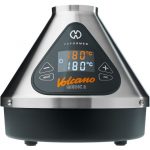
A table top vaporizer device that produces a vapour of cannabinoids from dried cannabis flowers. It is also suitable for vaporizing dronabinol dissolved in alcohol.
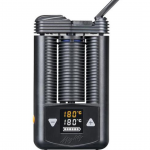
A portable vaporizer device that produces a vapour of cannabinoids from dried cannabis flowers.
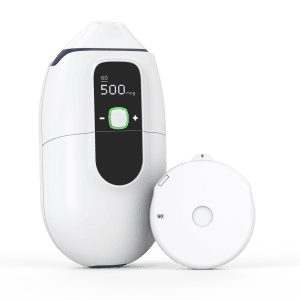
An EU-GMP-certified inhaler developed for professional healthcare use in hospitals or by licensed patients. It delivers metered and consistent doses of cannabinoids from full-spectrum cannabis in the form of aerosols. The device is currently only available in Israel and Australia.
Oromucosal administration
Use

Sublingual or buccal dosing.
Dose Type

Medicinal cannabis drops or sprays.
Onset

2 – 4 hours
Faster onset than oral ingestion, may reduce first-pass liver metabolism, suitable for
controlled dosing.
Duration
6 – 8 hours
With the oromucosal administration, the cannabinoids (THC and CBD) are absorbed through the mouth’s mucosa (the mucus membrane lining the inside of the mouth). The dose is usually administered sublingually (under the tongue) or buccally (inside the cheek) in the form of a solution, spray, or rapidly dissolving wafer. Among the products commonly administered via the oromucosal route are cannabis oil extract solutions.
Oral administration
Use
Oral administration.
Taken as other medicines patients may already use.
Dose Type

Capsules, tablets, oils, tinctures.
Onset
2 – 3 hours
Duration
6 – 12 hours
Variable absorption, slower effects, dosing complexity.
Oral cannabis-based preparations are similar in form to other medicines patients may already take. Products for oral administration can come in the form of solutions, tablets, or capsules. However, oral dosing can result in very low absorption of TCH and CBD. It is estimated that up to 6% of the total taken, only, is absorbed. That is because cannabinoids undergo extensive first‐pass metabolism in the liver when swallowed. Lower blood concentrations and a delay to reach peak blood concentration (approx. 120 min) slow the onset of action and duration of effects.
When to choose a route of administration?
| Route | Onset | Duration | Suitable for | Notes |
|---|---|---|---|---|
| Inhalation | 10-30 minutes |
1-3 hours | Rapid symptom relief | Requires medical-grade vaporizer for safety |
| Oromucosal | 2-4 hours | 6-8 hours | Controlled dosing, faster onset than oral |
May reduce liver metabolism, convenient |
| Oral | 2-3 hours | 6-12 hours |
Longer-lasting effects | Low bioavailability, less dose precision |
Pharmacy compounding
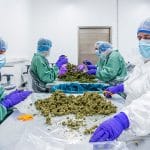
A compounding pharmacy can prepare cannabis medicine in a specific formulation and dosage form, such as tablet, oil, capsule, spray or ointment. This depends on the doctor’s prescription. These pharmaceutical preparations must meet legal quality requirements. For example, just as for registered medicines, requirements are imposed on the raw materials used for these preparations. However, there is inconsistency in regulations and compounding methods, resulting in variability in cannabinoid content between different preparations and pharmacies.
Cannabis oil
CBD extracts and full-spectrum cannabis extracts (containing cannabinoids, terpenes and other plant components) are commonly referred to as cannabis oil or cannabis drops. Cannabinoids are extracted from the flowers or leaves of the cannabis plant, often using a solvent extraction process (CO2 or ethanol). The extracts are put into solution (formulation and dose) to be administered either sublingually or orally. Cannabis oils in solution may be produced by pharmacy compounding as a magistral preparation. They are also produced by industry according to pharmaceutical standards.
Tea, edibles and smoking
Other administration routes such as teas, edibles and smoking are not discussed in further detail here. The effects of cannabis tea or edibles, such as cannabis-infused brownies and gummies, are unpredictable and not supported by clinical research. Smoking is also not considered a suitable administration route, as it is very harmful to health.
Disclaimer
The information on this page shares general information about the most common routes of administration for medicinal cannabis, which is an unregistered pharmaceutical preparation. It does not replace the advice of a healthcare professional, nor does it promote the use or the efficacy and safety of medicinal cannabis products. Furthermore, it does not aim to promote or provide guidance on the use of products produced by Bedrocan.
Frequently asked questions
When using higher doses of medicinal cannabis containing THC, the user may become ‘high’. People cannot get high from passive smoking, as is often thought.
The main component of cannabis, THC, is responsible for the euphoric effect. With large doses of THC, uncontrolled fits of laughter, a feeling of joy and mild euphoria, or a distorted reality (in colors and sounds) can occur. Some patients may experience mild feelings of anxiety. This is also called overdose.
Especially for people who have no experience with cannabis, the feeling of getting high is often unpleasant or even frightening. During treatment with medicinal cannabis, the patient is supervised by a doctor. This can adjust the dosage so that the chance of overdose, and therefore getting high, is very small.
In general, patients report no or few side effects from medicinal cannabis. The side effects that can occur include: dry mouth, increased appetite, higher heart rate, dizziness and being easily distracted.
Medicinal cannabis can be used for pain relief. The treatment is mainly for pain associated with the nervous system. Examples are pain caused by damaged nerves bundles, phantom pain, facial neuralgia and chronic pain that remains following recovery from shingles. Cannabis can have a relaxing effect on the body and mind. It can also be used as an anti-inflammatory. Or to prevent weight loss, nausea and vomiting. In some cases cannabis promotes sleep and appetite.
Pain relief and chronic pain
To date, the therapeutic benefit of medicinal cannabis has only been seen in neuropathic pain studies – the suffering originating from injury or disease that affects the sensory nerves. By comparison, studies measuring the effects on acute pain (e.g. postoperative pain) often show no beneficial effects. Most likely, this difference is related to the role endocannabinoids play in both types of pain. However, the mechanism behind this difference is not yet fully understood.
Chronic neuropathic pain is common, difficult to treat, and has limited treatment options. Consequently, even the modest effects of cannabinoids may be important for patients’ pain relief. Patient preference studies show the side effects from cannabinoids are better tolerated than strong opioid medications. Indeed, cannabis has often been studied in combination with other medicines, including for example morphine. It has been found that cannabinoids and opioids work together with a strong combined effect.
Scientific evidence
There is also sufficient scientific evidence to demonstrate that cannabis is effective for the treatment of:
- Muscle cramps, pain and convulsions caused by MS and spinal damage
- Nausea, diminished appetite, emaciation and weakness caused by cancer and AIDS
- Nausea and vomiting caused by chemotherapy or radiotherapy to treat cancer, hepatitis C and HIV infections and AIDS
- Gilles de la Tourette syndrome
- Therapy-resistant glaucoma
Also, more and more information and positive feedback is being received from patients and doctors concerning the efficacy of cannabis for other disorders. However, this is has not yet been sufficiently scientifically demonstrated. Examples include Crohn’s disease, colitis ulcerosa, epilepsy, pruritus (itching), migraine, rheumatism, rheumatoid arthritis, ADHD and brain trauma.
See also our medical conditions page.
Medicinal CBD oil contains cannabidiol as active ingredient, one major cannabinoid from the cannabis plant. CBD is a psychoactive substance, but does not have intoxicating effects, even at higher doses.
Patients should preferably consult a doctor if they want to start using a product containing CBD. CBD is a cannabinoid that acts on specific receptors in humans and interacts with other medication. Furthermore, patients should obtain CBD oil, e.g. Bedrolite® oil, for oral or oromucosal dosing from the pharmacy. Oils compounded by a pharmacy meet the highest pharmaceutical quality requirements. That cannot be said about the oil that can be bought online or at the drugstore. In recent years, a large, unregulated market for CBD oils and extracts have emerged. These products are typically derived from fibre-type cannabis strains, the industrial hemp plant, which contain large concentrations of CBD, but negligible THC. Most of the times it does not contain the amount of CBD that is stated on the label. The origin of the raw materials is often unclear. It is also possible that the oil is contaminated with heavy metals or pesticides. The production of this unregulated CBD oil is not controlled by the government in most countries. These oils are sold as a nutritional supplement.
Also read: Label accuracy of unregulated cannabidiol (CBD) products: measured concentration vs. label claim
To learn more about the effect of CBD, download a free copy of A clinical primer.
Current cannabis products from Bedrocan can be administered by inhalation, through a high-quality vaporizer offered by Storz & Bickel or Syqe Medical. Typically, the administration method will depend on the type of treatment medicinal cannabis is used for. Typically, inhalation of cannabis material through a vaporizer offers a relatively quick effect, which is particularly beneficial for patients suffering from chronic pain, as they require an immediate relief of pain. For other treatments an oral or oromucosal route of administration may be more suitable, as it offers a longer effect. Bedrocan’s education material like the Clinical primer, and Prescribers Update will provide healthcare professionals with additional insight into the matter and hopefully facilitate the right decision.