

Updates

In this Updates section, you will find a selection of articles that appeared in our newsletter. For a complete overview, go to our Archive.

If you want to stay ahead, you can also subscribe to our newsletter to stay informed of the latest developments.

How oromucosal administration of cannabinoids works

Oromucosal dose forms are relatively easy to administer. The ease of dosing and rapid onset of action mean oromucosal administration, via the sublingual or buccal surface, is the preferred choice for many physicians and patients.

THC and CBD are highly lipophilic compounds, which are rapidly absorbed by the oromucosa (in particular, the sublingual surface), entering the bloodstream and bypassing the liver. Bioavailability generally ranges between about 5% and 20% and varies according to the dose form (viscous solutions, sprays, wafers), the vitality of the mucosa, and the accuracy of dosing by the patient. Inevitably, some of the administered doses will be swallowed, resulting in
first-pass metabolism.

Oromucosal pharmacokinetic profile

Bioavailability Up to 20%
Peak plasma concentration 30-120 minutes
Onset of clinical effects 30-90 minutes
Duration of action 6-8 hours

Plasma concentrations

Peak plasma concentrations vary according to the dose form and concentration, and may be reached between 30-120 minutes, resulting in the onset of clinical effects after about 30-90 minutes and tapering off within 6-8 hours.

Spray, sublingual drops, and then wafer dose forms, respectively, appear to increasingly reduce variability in Tmax and to reach higher Cmax with similar doses. Plasma concentrations of THC tend to be higher than corresponding CBD after administration of CBD:THC medicines. The plasma increase of cannabinoids is dose-dependent.
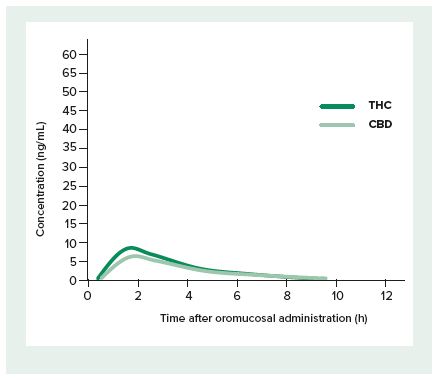
Plasma concentration of thc and cbd after oromucosal administration

Reducing variability in oromucosal dosing

The dose format can introduce or reduce variability in the taken dose, for example:

  • Actuated, metered dose sprays are a precise dosing format, with a specific dose per spray. A 10.8 mg THC and 10 mg CBD dose may reach a Cmax of 5.5 ng/ mL and 2.5 ng/mL, respectively, after 1.6 hours. Formulations may contain alcohol in the solution, which can be unpleasant for patients or cause mild site-specific ulceration.
  • Sublingual wafers provide highly consistent dosing and rapidly dissolve with a good absorption rate. A 50 mg CBD dose may reach a Cmax of 19.84 ng/mL after 3.3 hours.
  • With sublingual solutions, frail or elderly patients may find it hard to squeeze a dropper under the tongue, and under or over-dose may occur. A syringe helps the accuracy of the dose amount but may be fiddly for frail or elderly patients. Some oromucosal solutions contain chlorophyll, which may cause an unpleasant taste. Post-administration, consuming a banana or boiled sweet may help.
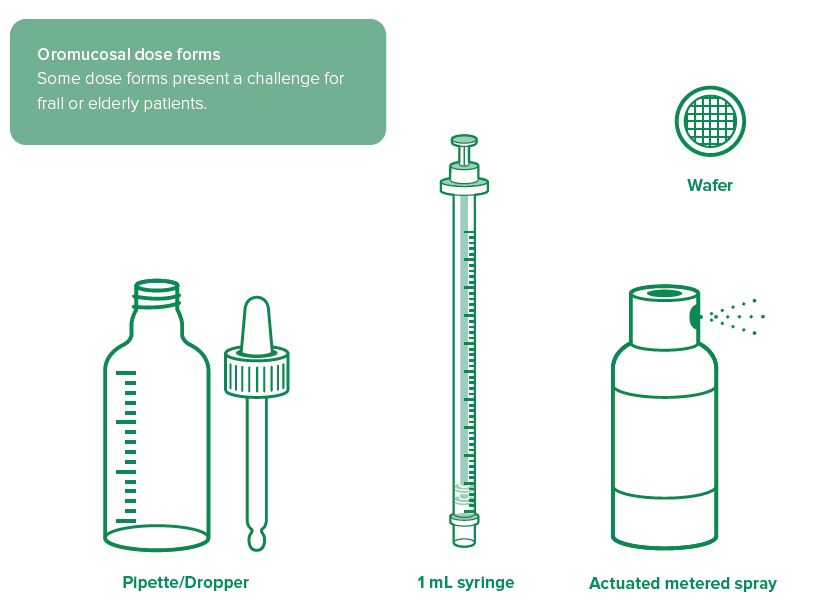
Oromucosal administration formats

A clinical primer

A guide to the rational use of cannabis-based medicines

The above information was taken from the Clinical primer – A guide to the rational use of cannabis-based medicines. Do you want to learn more about pulmonary or oromucosal administration? Go to our healthcare professionals section and download the Clinical primer. You can also stay up-to-date with our healthcare professionals’ resources by subscribing to our newsletter.

How the inhalation of cannabis works

Administration via the pulmonary route (inhalation) of cannabis can be a convenient, very rapid, and efficient method of cannabinoid delivery for patients. It allows self-titration to the desired therapeutic effect.

A vaporizer medical device is used to administer pharmaceutical-quality cannabis herbal material. The rapid onset of effects of inhaled cannabinoids enables easier titration to an optimal dose based on symptom severity, tolerability, and avoidance of side effects.

Bioavailability of inhaled cannabis

THC and CBD are lipophilic compounds rapidly absorbed and distributed by the lungs. The bioavailability of inhaled THC is upward of 40%. Following inhalation, THC and CBD plasma levels increase rapidly. The increase in plasma concentration of cannabinoids is dose-dependent. Peak plasma concentrations typically occur 3-10 minutes after inhalation, resulting in the onset of clinical effects after about 5-10 minutes and tapering off within 1-3 hours.

Pulmonary pharmacokinetics profile

Bioavailability Up to 40%
Peak plasma concentration 3-10 minutes
Onset of clinical effects 5-10 minutes
Duration of action 1-3 hours

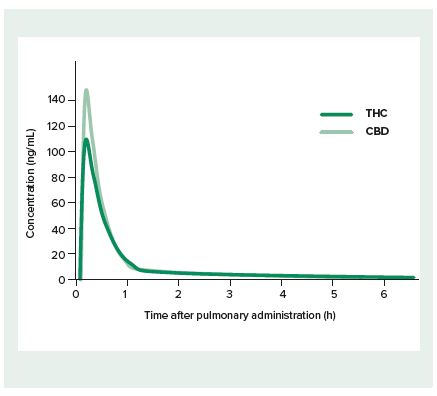
THC and CBD plasma concentrations

There is low inter-subject variability in THC plasma concentrations with pulmonary administration. Pulmonary administration of THC mostly avoids first-pass metabolism. THC is converted to its active metabolite, 11-OH-THC, and further metabolism occurs later.

inhalation of cannabis
Figure: approximate plasma concentrations after pulmonary administration of 20 mg THC or CBD

Reducing variability in pulmonary dosing

Administration by smoking is never advised. The use of a quality vaporizer medical device eliminates exposure to toxic pyrolytic compounds of cannabis smoke and reduces variability in administered cannabinoid content, with ≤ 35 % of the dose reaching the lungs. Highly functioning devices markedly reduce variability in the administered dose.

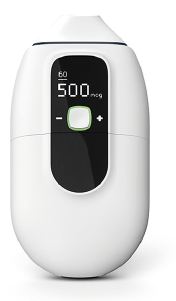
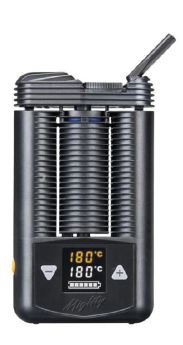
Registered medical devices like the SyqeAir Inhaler or the Volcano Medic® are now available. Other reliable, affordable, and portable devices are required to ensure that patients have access to these devices.

SyqeAir Inhaler
SyqeAir Inhaler
Mighty Medic
Mighty Medic

Inter-patient and intra-patient variability

Inter-patient and intra-patient variability in administered dose occurs from the depth of inhalation, duration of inhalation, and breath-holding time. The quality and consistency of the cannabis herbal material used and the quality of the thermal inhalation medical device will either increase or decrease variability.

Patients with COPD and/or asthma should be monitored when using such a device, as the depth of breath and breath-hold time will impact the total dose.

A clinical primer

A guide to the rational use of cannabis-based medicines

The above information was taken from the Clinical primer – A guide to the rational use of cannabis-based medicines. Want to learn more about the pharmacokinetic parameters (PK) of inhaled vapour containing THC and CBD? Go to our healthcare professionals section and download the Clinical primer. You can also stay up-to-date with our healthcare professionals’ resources by subscribing to our newsletter.

How oral administration of cannabinoids works

Oral preparations are familiar dose forms. They are similar to other medicines patients already take and are easy to administer for patients who can swallow. The ease of dosing is offset by intra- and inter-patient variability. While there is a positive dose-concentration relationship for most dose forms (solutions, tablets, capsules), oral THC and CBD have a highly variable pharmacokinetic profile, which differs between formulations.

Absorption is slow and erratic within the gastrointestinal tract. Significant first-pass hepatic metabolism and high lipid solubility mean 5-10% of the administered dose reaches the systemic circulation.

THC is metabolised in the liver to the major pharmacologically active metabolite 11-OH-THC, which occurs in approximately the same concentration in the blood as the parent compound, THC. Therefore, the bioavailability of parent and metabolite, which are both active, results in an elevated bioavailability.

The high variability in the THC and CBD absorption of oral formulations results in delayed peak plasma concentrations compared to other routes of administration. Therefore, the accuracy of determining a therapeutic dosage is reduced for individual patients.

Following oral ingestion, THC maximal plasma concentrations are reached after 60-180 minutes, reaching maximal clinical effects after 60-180 minutes and tapering off after 6-12 hours, depending on the dose.

Oral pharmacokinetic profile

Bioavailability Up to 10%
Peak plasma concentration 60-180 minutes
Onset of clinical effects 2-3 hours
Duration of action 6-12 hours

Pharmacokinetic profiles

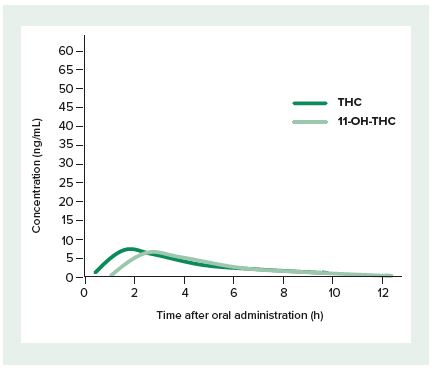
An oral THC dose is typically lower than a CBD dose, resulting in different pharmacokinetic profiles. For example, a 20 mg THC oral dose may reach a Cmax of 7.9 ng/mL after approximately 135 minutes, while a 1500 mg CBD oral dose may reach a Cmax of 541 ng/mL after approximately
150 minutes.

THC metabolism occurs mainly in the liver, catalysed by CYP450 enzymes. THC undergoes extensive first-pass metabolism, primarily by hydroxylation to 11-OH-THC, which is an active metabolite. Both THC and 11-OH-THC are present in approximately equal concentrations in plasma. As would be expected, CBD is also subjected to significant first-pass metabolism.

THC and CBD are widely distributed, particularly in adipose tissue. Body storage of THC increases with increasing frequency and duration of use.

Approximate plasma concentrations after oral administration of 20 mg THC

Reducing variability in oral dosing

The absorption rate is affected by gut physiology, diet, and general stomach health. The low bioavailability (< 10%) makes it difficult to titrate doses.

Patients should be advised to take their medicine consistently, with regard to time and dietary intake, to reduce variation.

For THC, an appreciable food effect is observed with highfat, high-calorie meals, resulting in an up to a 4-hour delay in mean Tmax, while Cmax is not significantly changed.

Administration of high-dose CBD with high-fat/high-calorie meals markedly increases Cmax and reduces the total variability compared with the fasted state.

A clinical primer

A guide to the rational use of cannabis-based medicines

The above information was taken from the Clinical primer – A guide to the rational use of cannabis-based medicines. Do you want to learn more about pulmonary or oromucosal administration? Go to our healthcare professionals section and download the Clinical primer. You can also stay up-to-date with our healthcare professionals’ resources by subscribing to our newsletter.

The trusted Bedrocan® flower soon available as Becanex PIEX concentrate for compounding

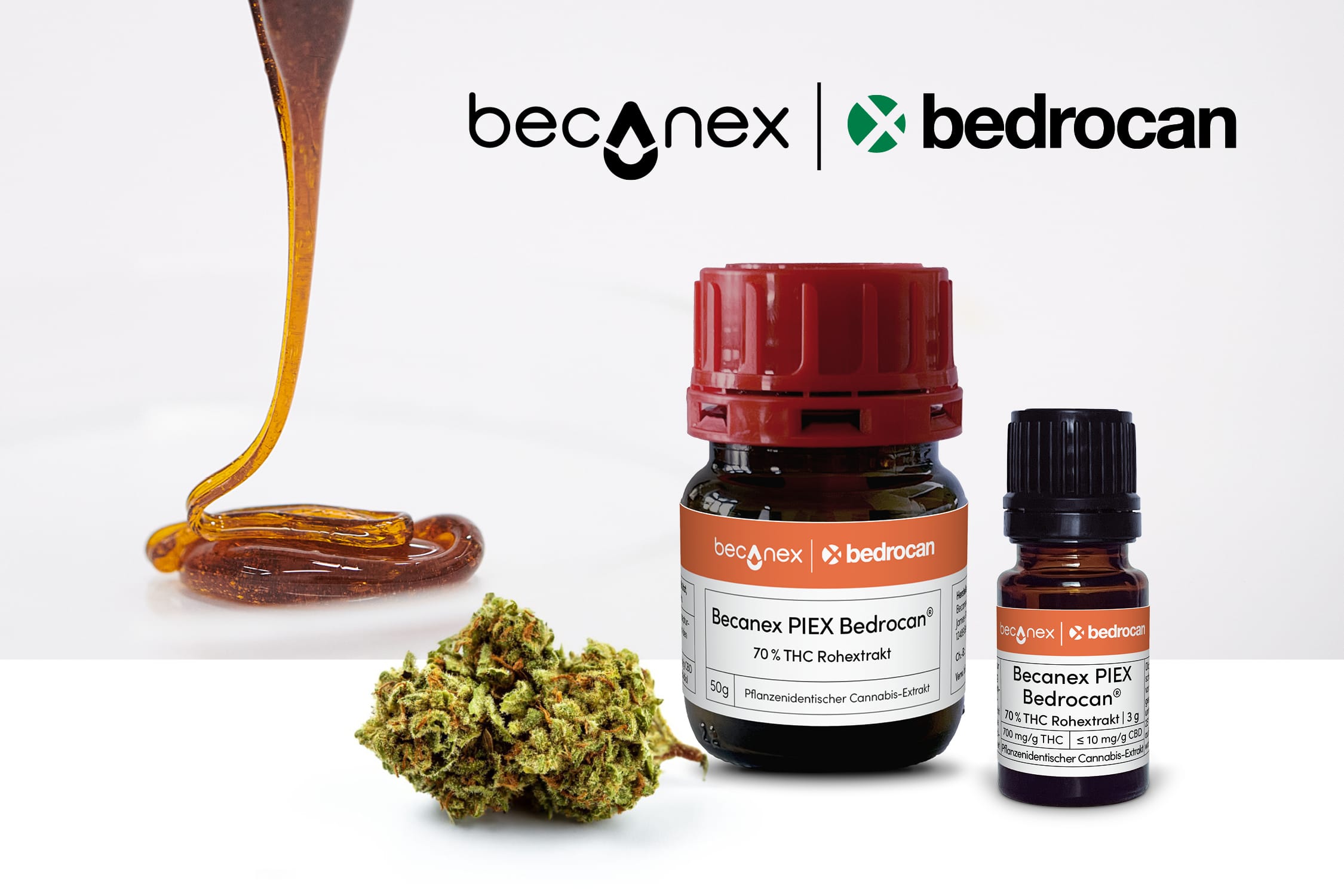
For the first time, the most prescribed Bedrocan® flower will be available to pharmacists as a concentrate for bespoke compounding. The product can be used for a versatile range of formulations, while maintaining the consistent quality trusted by doctors and patients for over 20 years. This is made possible through a long-term partnership and the combined expertise of Dutch pioneer Bedrocan and Berlin-based extraction specialist Becanex. The companies aim to start supplying the concentrate by the summer of 2026.

Becanex PIEX Bedrocan 70%

The first jointly developed cannabis extract is the Becanex PIEX Bedrocan® 70% THC Concentrate. Becanex PIEX Bedrocan® faithfully contains a fingerprint of the natural cannabinoid and terpene profile of the original Bedrocan® flower. By preserving this profile through Becanex’s proprietary extraction method, the extract delivers predictable, consistent results.

Becanex PIEX

Versatility in patient-specific care

One of the defining strengths of the product is its standardised form and compounding versatility. The concentrate is specifically designed to be incorporated into a broad range of patient-specific preparations, including oral solutions, capsules, suppositories, topical forms, and inhalation dosages. The option to vaporize the concentrate is particularly significant as it will give patients an additional method of inhalation alongside the flower. The extensive range of options provides healthcare professionals and pharmacists with full flexibility in tailoring therapies to individual patient needs.

A partnership rooted in shared values

The collaboration between Bedrocan and Becanex is grounded in a shared philosophy: that cannabis, as a medical product, demands the same rigour, standardisation and transparency expected of any pharmaceutical ingredient. The two companies’ complementary expertise, Bedrocan in standardised cultivation and Becanex in plant-identical extraction, makes Becanex PIEX Bedrocan® a natural expression of that shared commitment. Bedrocan CEO Jaap Erkelens has high expectations for the collaboration and the product: “We have always been precise about how we grow our cannabis. Becanex is equally precise about how they extract it. That shared attention to detail is what makes this product worth putting in front of pharmacists, prescribers and patients. In addition, the concentrate now enables doctors to prescribe our main product Bedrocan® in multiple compounding formulations.”

“Patients who have found a cannabis strain that works well for them shouldn’t have to compromise if they need it in a different form. With Bedrocan as our partner, we can now offer prescribers exactly that, building on a strain they already know and trust. That we are here today is no coincidence: as early as 2014, the team around Becanex co-founder Eral Osmanoglou worked together with Bedrocan under a scientific license to develop the first extracts from the Bedrocan® flower. The regulatory framework for such a product wasn’t there back then — today, we are returning to those results and bringing them to market” says Sebastian Kamphorst, Director of Becanex GmbH.

Product collaboration – Cannabis Europe London & Medical Cannabis Conference in Berlin 2026

The launch of Becanex PIEX Bedrocan marks the beginning of a broader product collaboration between the two companies, with Germany as the first market to launch the product. Both companies will present their joint products to the public for the first time at two consecutive industry events: Cannabis Europa in London and the Medical Cannabis Congress in Berlin, taking place in the same week. We look forward to welcoming you at our booth.

Orders

The Becanex PIEX Bedrocan 70% THC concentrate will be available to order for pharmacies from summer 2026 onwards. Product information and technical documentation can be requested immediately.

For more information, contact our business team:

    Your Name *

    Your Email *

    Subject

    Your Message

    Privacy Policy *

    Bedrocan launches Bedromed: standardised cannabinoid formulations derived from its trusted cannabis APIs

    Bedrocan is proud to announce the launch of Bedromed, a new product line of standardised cannabinoid-based formulations. Leveraging Bedrocan’s decades of expertise in producing high-quality cannabis active pharmaceutical ingredients (APIs),  the Bedromed product line brings the trusted Bedrocan® and Bedrolina® cannabis APIs into new administration forms.

    Bedromed spray & Bedromed drops

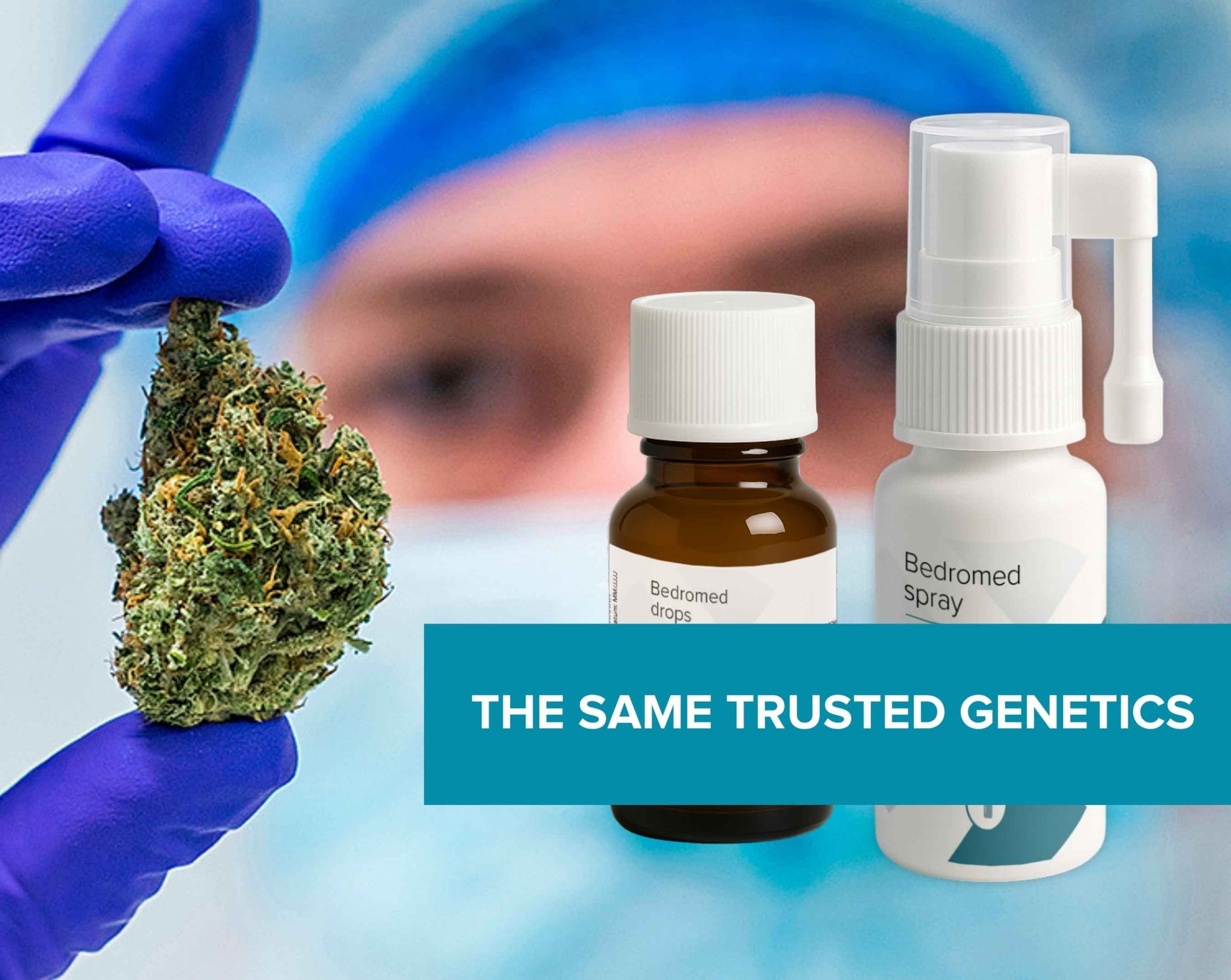
    The Bedromed product line is designed to provide physicians and patients with a broad range of cannabinoid delivery methods that support precise dosing and streamlined administration. While other novel forms are expected to be included in the future, the initial Bedromed portfolio features two administration forms with a variety of THC:CBD ratios, including high-CBD, balanced, and high-THC options:

    • Bedromed spray is a standardised cannabinoid-based formulation developed for sublingual administration and is based on Bedrocan® and Bedrolina® cannabis APIs.
    • Bedromed drops is a standardised cannabinoid-based formulation developed for oromucosal administration and is based on Bedrocan® cannabis API.

    Same trusted genetics

    For over 20 years, Bedrocan has been known for consistency in medicinal cannabis production. Bedromed extends this legacy by offering Bedromed drops and Bedromed spray derived directly from the same trusted genetics and validated processes that have defined Bedrocan’s cannabis APIs.

    CEO, Jaap Erkelens: “The launch of Bedromed is a significant expansion of our portfolio, allowing us to bring our trusted API closer to the patient alongside our core commitment to API supply. By offering new cannabinoid-based formulations, we ensure that the pharmaceutical-grade consistency we are known for is now accessible in modern, patient-appropriate delivery formats.”

    Bedromed

    Consistent pharmaceutical quality

    All Bedromed products are manufactured in compliance with European good manufacturing practice (EU-GMP). Bedrocan guarantees full traceability from source plant to final product, with documented controls at each stage of the manufacturing process. This end-to-end oversight eliminates gaps in the supply chain and ensures consistent pharmaceutical quality across every batch.

    Availability

    The Bedromed product range will be available for distribution starting August 2026, with initial availability in Germany and further markets to follow.


    For more information, contact our business team:

      Your Name *

      Your Email *

      Subject

      Your Message

      Privacy Policy *

      A clinical research review about cannabis for prescribers

      Over the last 20 years a number of clinical studies and scientific research projects have been performed on the Bedrocan® medicinal cannabis product. This clinical research review about cannabis for prescribers is a summary of the most important findings.

      Pain – opioid-sparing treatment option

      Bedrocan® may be used as part of an opioid-sparing strategy in the treatment of pain. In this study of pain clinic patients, 78.5% were prescribed an oral dose of Bedrocan®, with most patients receiving a prescription for 12 months (range 8-21 months). At study initiation, 20% of the cohort were prescribed high doses of opioids (> 90 mg morphine equivalent/day). A high benzodiazepine prevalence was also observed. After 6 months of cannabinoid therapy, a significant increase in the number of patients not receiving opioid medications was identified (from 32.1% to 55.4%).
      However, a decrease in anticonvulsant, antidepressant, and benzodiazepine medications did not occur.

      Study reference: Nunnari et al. (2022). European Review for Medical and Pharmacological Sciences.

      Pain – no additional respiratory depression

      Respiratory depression is a common side effect of strong opioids. The co-administration of inhaled Bedrocan® (100 mg cut flos) has no effect on ventilatory control after pre-treatment with placebo or oxycodone (20 mg) in a randomised controlled crossover trial in healthy individuals.

      The inhaled Δ-9-THC dose, taken at 1.5 and 4.5 hours post the oral oxycodone dose, did not enhance opioid induced respiratory depression. Oxycodone itself reduced isohypercapnic ventilation (VE55) by 30% from baseline. The second cannabis inhalation had no effect on VE55. The coadministration of oxycodone and Δ-9-THC increased the degree of sedation by up to 30% and mild intoxication by up to 10%, and decreased energy state by up to 30% and the state of alertness by up to 40%.

      Study reference: Van Dam et al. (2023). British Journal of Anaesthesia.

      Bedrocan®

      Bedrocan® is the brand name of the variety Cannabis sativa L. ‘Afina’. Bedrocan® has a consistent composition of active ingredient, batch-to-batch, dose-to-dose. Standardisation allows prescribers to better monitor dosing, condition progress, and minimise side effects.

      A high-quality vaporizer device is an effective inhalation delivery system. It makes it possible to titrate to an optimal dosage (e.g. Storz & Bickel). Administered by inhalation it may have positive effects on subjective pain intensity in a variety of pain-related medical conditions, with most research focussing on neuropathic pain. Further randomised controlled trials are needed to demonstrate safety and efficacy.

      Fibromyalgia – an alternative treatment

      Bedrocan® may represent an alternative analgesic for patients diagnosed with fibromyalgia but who do not respond well to conventional treatments (i.e. tramadol, amitriptyline, duloxetine, pregabalin).

      This retrospective study showed this cohort of pain clinic patients responded well to Bedrocan® 200 mg/day cut flos. A reduction in pain intensity was found at 1, 3, and 12 months of treatment. Significant improvements were observed in the Numerical Rating Scale (NRS), Oswestry Disability Index (ODI), Hospital Anxiety and Depression Scale, Widespread Pain Index (WPI), Severity Score (SyS) at 1 month; in NRS, ODI, and WPI at 3 months; and in NRS, ODI, and SyS at 12 months.

      Most patients treated with Bedrocan® continued their therapy. Stopping therapy was due to nonserious, transient side effects such as confusion and dizziness. An appropriate titration period would help reduce the incidence of these side effects, and improve medicine efficacy and treatment compliance.

      Study reference: Mazza. (2021). Journal of Cannabis Research.

      Avoiding side effects

      Often CBD (cannabidiol), a non-intoxicating cannabinoid, is prescribed to attenuate the psychotropic side effects of Δ-9-THC. A recent study, however, shows CBD does not influence any of the cognitive impairments or psychological symptoms. Neither does CBD attenuate any of the other acute effects of Δ-9-THC, including behaviour, subjective experiences, and cognition.

      Additionally, co-administration of CBD had no influence on Tmax, metabolites OH-THC or COOH-THC, or to total systemic exposure (AUC).  A recent study demonstrated that CBD after a 450 mg oral dose of CBD can increase the acute effects of Δ-9-THC, likely explained by CBD inhibiting cytochrome P450-mediated metabolism of THC.

      Study references:

      Bedrocan first to enter Germany, available for almost 20 years

      Bedrocan was the first to enter the German market, meaning that Bedrocan cannabis products have been available in Germany for almost 20 years. Exports from the Netherlands began in 2008, and since then, Bedrocan has supplied over 15,000 kilos of medicinal cannabis to German patients. These numbers may be dwarfed by the size of the German market, which analysts predict will account for approximately 1,005 tons* of cannabis flos alone by 2026. Nevertheless, our products remain a favorite among prescribers and patients due to their high quality and efficacy. Curious about how exports to Germany first took off? Bedrocan founder Tjalling Erkelens knows all about it.

      When it all started

      In 2008, medicinal cannabis flos became available to patients in Germany for the very first time. Erkelens: “In those years, there were two other legal sources worldwide: In the United States, the University of Mississippi was authorized to cultivate cannabis for research, and in Canada, Prairie Plant Systems, produced for the Canadian government. Bedrocan was the third largest supplier in the world, and we produced on behalf of the Dutch government. We sourced the cannabis for the German market through the Office of Medicinal Cannabis (OMC).”

      Groundbreaking ruling

      The available products were Bedrocan®, Bedrobinol®, and Bediol®. “Those were the only three medicinal cannabis products available at the time that we were authorized to cultivate on behalf of the OMC,” Erkelens continues. Exports didn’t take off entirely spontaneously.

      The impetus was a ruling by a German court declaring that there was a medical necessity for making cannabis available. Erkelens: “It was a fairly groundbreaking ruling by the German Federal Administrative Court on May 19, 2005. An MS patient, who was also a lawyer, filed a lawsuit against BfArM, the drug regulatory agency responsible for drug approval in Germany. The claimant was severely disabled, had tried all conventional medications and demanded access to cannabis as it was the only way to relieve his symptoms.”

      Medical emergency

      BfArM consistently denied access, citing the German Opium Act (BtMG). However, the court ruled that BfArM could not simply reject applications if there was a medical emergency without alternatives. The court stated that the fundamental right to bodily integrity outweighed the strict prohibition of drugs,” Erkelens recalls.

      “The drug regulatory agency was forced to invoke a clause allowing exceptions in the public interest. According to the court, the medical care of an individual in need fell under these exceptions.” Although the ruling was made in 2005, the legal and bureaucratic process took years. Around 2007 or 2008, the first official exemptions were actually issued to individual patients in Germany.

      Tjalling Erkelens - Bedrocan, the first to enter Germany
      Tjalling Erkelens

      Erkelens: “These patients were then legally allowed to obtain cannabis from German pharmacies. And our products were the only ones available at the time. This exemption system remained in place until the 2017 law change.”

      Bedrocan, the first to enter Germany

      Does this mean Bedrocan’s products were the first medicinal cannabis products to enter Germany? Erkelens: “As far as cannabis flos is concerned, the answer is an absolute ‘yes.’ However, dronabinol, pure THC, had already been available by prescription since 1998. But that’s a completely different story, in which Bedrocan wasn’t involved.”

      *) Source: Cannamonitor

      Limited knowledge and high costs are barriers to accessing medicinal cannabis in the Netherlands

      Dutch patients who use cannabis to manage health symptoms face significant barriers to accessing medicinal cannabis through the healthcare system, according to a new study by the Trimbos Institute. Based on responses from more than 1,000 participants, the research reveals a systemic disconnect: although patients would prefer to obtain medicinal cannabis via a doctor’s prescription, many feel forced to turn to coffeeshops or home cultivation instead. The study provides the first comprehensive insight into why such a large group of medicinal cannabis users remain outside the regulated healthcare framework. A shortage of doctors willing to prescribe cannabis and affordability of prescribed products emerged as important barriers.

      Limited prescription of medicinal cannabis

      Medicinal cannabis has been legally available in the Netherlands since 2003 for patients with a doctor’s prescription. Despite this, access remains highly restricted. An estimated half a million people in the Netherlands use cannabis to alleviate physical or psychological symptoms, yet only a small percentage – around 7,000 patients – receive prescribed cannabis. The vast majority of medicinal users obtain cannabis outside formal healthcare channels. “These are patients who often suffer from serious and long-term health conditions,” said Lisa Strada, the study’s project leader. “Like everyone else, they want access to a medication they know helps them, instead of having to rely on unregulated or illegal sources. It is deeply frustrating for them to know that medicinal cannabis is legal in the Netherlands, yet they still can’t access it.”

      Lisa Strada about barriers to accessing medicinal cannabis
      Lisa Strada

      Barriers to accessing prescribed medical cannabis: qualitative insights from people using non-prescribed cannabis for medicinal purposes in the Netherlands

      Despite its longstanding legal status, access to prescribed cannabis in the Netherlands remains constrained by significant structural, informational, and sociocultural barriers. Addressing these barriers requires coordinated policy reforms and healthcare responses to ensure equitable, patient-centred access to prescribed cannabis and reduce reliance on unregulated sources.

      1. Perceived high cost

      Financial barriers are a major factor limiting access to prescribed cannabis. Since 2018, medicinal cannabis has no longer been reimbursed by Dutch health insurance, placing a significant financial burden on patients. This is particularly problematic for patients with chronic and debilitating conditions, who are often unable to work and may rely on social assistance. Most study participants said they would prefer to obtain cannabis through the formal healthcare system, citing the regulated quality, safety, and transparency of pharmacy-supplied products. However, high out-of-pocket costs drive many toward unregulated or illegal sources, where prices may be lower but product quality and safety are not guaranteed.

      2. Limited availability of prescribing physicians and restrictive medical guidelines

      Participants generally felt that there were not enough physicians in the Netherlands who prescribe cannabis. While a few reported positive experiences with physicians who were open to prescribing it, most had had negative encounters or assumed that their physician would reject their request for prescribed cannabis.

      Several participants shared frustrating experiences in which physicians cited medical guidelines or recommendations as reasons for not prescribing cannabis. The recommendation from the Dutch Society of General Practitioners (NHG), which advises against prescribing cannabis outside of palliative care, was explicitly mentioned. Participants noted that physicians often viewed cannabis as a treatment of last resort rather than a viable treatment option. A few participants reported that their physicians were in principle willing to prescribed cannabis but felt constrained by guidelines and recommendations.

      3. Lack of accurate and accessible information

      Access to prescribed cannabis is further hindered by limited medical expertise. Although any doctor in the Netherlands is legally permitted to prescribe medicinal cannabis when standard treatments are insufficiently effective or cause too many side effects, this option is rarely used in practice. “This is largely due to a lack of knowledge,” said Strada. “Medicinal cannabis is not a standard part of medical training, and there are too few opportunities for continued education.” In addition, persistent stigma surrounding cannabis discourages patients from discussing it with their doctors for fear of being judged.

      Reliable and accessible information about medicinal cannabis via official authorities is also scarce. As a result, people typically search for information on online forums and social media, where misinformation is widespread.

      4. Poor fit between services and patient needs

      At present, five cannabis strains are available by prescription in the Netherlands. Study participants reported that this limited selection does not adequately meet patients’ diverse needs. Each person’s body reacts differently to cannabis, meaning a strain that works for one person may not be equally effective for another. Furthermore, variation in the plant itself can also influence its effectiveness. Patients, therefore, called for a broader range of products, which would increase the likelihood of finding a product that works for their specific symptoms.

      Chronic pain and sleep problems

      The study shows that people use non-prescribed cannabis for a broad range of conditions, most commonly chronic pain and sleep problems. Three-quarters of participants reported using cannabis for multiple conditions. Many indicated that cannabis significantly improved their quality of life. However, using cannabis from unregulated sources and without medical supervision carries risks. Patients typically smoke cannabis with tobacco, rather than using less harmful alternatives such as vaporizers or cannabis oils. In addition, most users are unaware of the THC or CBD content in their cannabis and express concerns about potential contaminants in unregulated products.

      5. Stigma

      Interview data indicated that the acceptability of prescribed cannabis as a therapeutic option was shaped by sociocultural factors, with stigma emerging as a key barrier to access. Participants described that stigma was driven by negative associations with cannabis as a recreational drug and a potential substance of abuse.

      Participants reported both experienced and perceived stigma from physicians, friends, family, and society at large. Many described being labelled as ‘drug users’ or believing that others saw them this way. Some recalled encounters in which physicians or social contacts were dismissive or judgmental of their medicinal cannabis use, because they believed it was motivated by a desire to get high rather than a therapeutic need.

      Improving accessibility

      Despite medicinal cannabis being legally available in the Netherlands for more than twenty years, access through conventional healthcare remains severely restricted. The Trimbos Institute concludes that substantial policy changes are needed to improve availability and better align care with patient needs. Improving access would not only reduce reliance on unregulated sources but also more effectively safeguard public health.

      Disclaimer

      This research was funded by Bedrocan. However, the study was conducted entirely independently and complies with the Code for the Prevention of Improper Influence due to Conflicts of Interest.

      Direct industrial orders can now be placed at Bedrocan

      A significant regulatory shift has introduced new opportunities for the trade of medicinal cannabis from our Dutch facility. Commercial parties holding a valid opium exemption or import license can now order cannabis API and raw materials directly from Bedrocan.

      Direct industrial orders

      This new pathway is specifically designed for industrial orders where cannabis material serves as the basis for developing cannabis medicines and other cannabis-derived products. These transactions are facilitated through a tripartite agreement between the Office of Medicinal Cannabis (OMC), Bedrocan, and the purchasing party, marking a significant evolution in trade flexibility within the Dutch market.

      The new policy rule took effect on January 1, 2026.

      Future availability: Bedrocan Canada

      Looking beyond the Netherlands, Bedrocan is also making significant progress in commissioning its new facility in Canada. In late 2025, the first cuttings were exported from the Netherlands for local cultivation. This facility will soon expand our global reach, producing several cannabis brands as APIs for both local and international markets.

      For technical specifications, product availability, and ordering details, please contact our team at orders@bedrocan.com.

      Bedrocan transitions toward new medicinal cannabis framework in the Netherlands

      As announced by the Dutch Ministry of Health, Welfare and Sport in parliamentary letters, the relationship between the Office of Medicinal Cannabis (OMC) and Bedrocan is changing. After 20 years as the primary supplier to the Dutch government, Bedrocan is now transitioning toward a new medicinal cannabis supply model amid policy changes.

      Throughout this transition, the OMC has ensured that medicinal cannabis produced by Bedrocan remains available to Dutch pharmacies in 2026. This is intended to keep patient supply steady until the upcoming legislative changes take effect.

      CEO Jaap Erkelens remains optimistic about the transition: “While this transition was expected following previous announcements by the Minister of Health, our intention is to ensure a continuous supply of medicinal cannabis to the Dutch market in the future.” Bedrocan produces five varieties of medicinal cannabis in the Netherlands with different THC and CBD ratios.

      Change to the Opium Act

      Bedrocan is looking forward to the implementation of a new medicinal cannabis policy in the Netherlands. A central part of the new policy is a proposed amendment to the Opium Act. In letters to Parliament, the Ministry of Health has indicated it intends to limit the role of the OMC to issuing import and export licenses. The OMC was originally founded to make the medicinal cannabis program possible in the Netherlands.

      Erkelens: “The reduced role of the OMC would potentially create more opportunities for production and distribution of medicinal cannabis for companies like Bedrocan.” The Ministry has indicated the new Opium Act will go into effect in 2027. Until the new legislation is enacted, the OMC remains responsible for supplying medicinal cannabis to pharmacies in the Netherlands and abroad.

      Medios AG becomes Bedrocan’s exclusive distribution partner for Germany

      Bedrocan has entered a strategic partnership with Medios AG, a leading European provider of specialised medicines, with its headquarters in Berlin. Under this agreement, Medios AG becomes Bedrocan’s chosen distribution partner of its medicinal cannabis products for Germany, with plans to gradually expand the partnership to Austria, Belgium, Italy and Spain.

      Medios will distribute medicinal cannabis produced at Bedrocan’s Danish facility to pharmacies and wholesalers throughout Germany. To ensure a seamless transition, Medios will leverage the expertise and network of Cannaflos, which has been distributing Bedrocan’s products in Germany since 2020. Medicinal cannabis produced by Bedrocan in the Netherlands will continue to be exported by the Office for Medicinal Cannabis for the time being.

      Extensive reach and pharmaceutical alignment

      The selection of Medios AG was driven by its extensive reach and knowledge of individualised medicine. Bedrocan’s CEO Jaap Erkelens explained: “From the very beginning, our cannabis has been exclusively intended for patients or drug developers. This pharmaceutical approach has allowed us to connect with a reputable pharmaceutical distributor like Medios. We are therefore thrilled to have found a reliable and solid distribution partner to get our products to German patients.” Medios distributes medicines throughout Germany and produces specialised medications and patient-specific therapies.

      One-stop-shop for German pharmacists

      The collaboration simplifies the procurement process for pharmacists, who previously navigated a fragmented market of dozens of smaller distributors to secure Bedrocan’s products. This often led to supply inconsistencies and administrative burdens. Erkelens: “With this collaboration, we are introducing a one-stop-shop for pharmacists to place their orders. They no longer have to visit dozens of distributors in their search for Bedrocan’s cannabis.

      How to order?

      Medios currently markets two cannabis products in Germany: Bedrocan® and Bedrocan® forte. For orders in Germany, contact the Medios team directly at: orders@medios.group.

      About Medios

      Medios is a leading provider of specialty pharmaceuticals in Europe, with locations in Germany, the Netherlands, Belgium and Spain. Medios is Germany’s first publicly listed specialty pharmaceuticals company. In 2024, the company expanded its presence in the Netherlands by acquiring the Ceban pharmacy chain. Now, Medios is also the first company to receive exclusive rights to distribute Bedrocan cannabis products in agreed markets.

      Press announcement

      Medios AG steigt in den Markt für Medizinalcannabis ein.

      Bedrocan® forte with 25% THC available for the German market

      Bedrocan, renowned for its high-quality cannabis and consistent supply, is introducing an enhanced version of its well-established Bedrocan® product. The THC content has been increased from 22% to 25% without altering the underlying genetics or terpene profile. The company’s latest product will be marketed under the name Bedrocan® forte, in response to the growing demand for medical cannabis flower products with a higher THC percentage. Germany is the first country where the product is introduced.

      Bedrocan® forte is produced in Bedrocan’s new state-of-the-art Danish facility. The Danish cultivation team has successfully refined the growing conditions to guarantee a higher THC content. The plant used for this is Cannabis sativa L. ‘Afina’. This is the same chemovar that has been marketed under the Bedrocan® brand name since 2003, and which has a THC percentage of 22%. The forte version is, therefore, genetically and chemically identical to Bedrocan®.

      Compliance with the Ph Eu cannabis monograph

      Like Bedrocan®, Bedrocan® forte fully complies with the monograph standards of the European Pharmacopoeia. This means that the percentage of active ingredients in the cannabis flower can deviate by 10% from the percentage stated on the label. The terpene profile also remains the same. The physical characteristics of the flower, including structure, density, appearance, and aroma, are also unchanged.

      Active Pharmaceutical Ingredient

      Commencing in December 2025, Bedrocan® forte will be available as an active pharmaceutical ingredient (API) for pharmaceutical preparations by German pharmacists. The product is available in bulk packaging of 100 and 400 grams, with smaller packaging to be available later. In Germany the product will be distributed by Bedrocan’s new distribution partner. The partnership will be announced in due course. Availability in other international markets will follow later.

      Highest quality standards

      Bedrocan® forte is produced in accordance with all applicable requirements, including GACP and EU-GMP. It delivers the same pharmaceutical-grade quality as every other cannabis variety produced by the company. Thanks to highly standardised production methods, each batch is grown under identical conditions (controlled light, temperature, nutrients, etc.), guaranteeing a consistent cannabinoid and terpene profile over time.

      Book a meeting

      Interested in Bedrocan® forte or want more information about our future plans? Book a meeting with our Head of Business Development via the link below.

      Bedrocan forte - book a meeting
      page 1 of 3
      Contact Us

      We're not around right now. But you can send us an email and we'll get back to you, asap.

      Not readable? Change text.

      Start typing and press Enter to search

      Bedrolina - Compounding pharmacies & API cannabis
      Post-Traumatic Stress Disorder cannabis